
Orthopaedic clinic software
Orthopaedic clinic software and EMR
Phisley runs a bone and joint clinic from the front desk to the physio room: the joint or spine examined by side, X-rays with the doctor’s findings, casts with the day they come off, and physiotherapy courses with their own receipts.
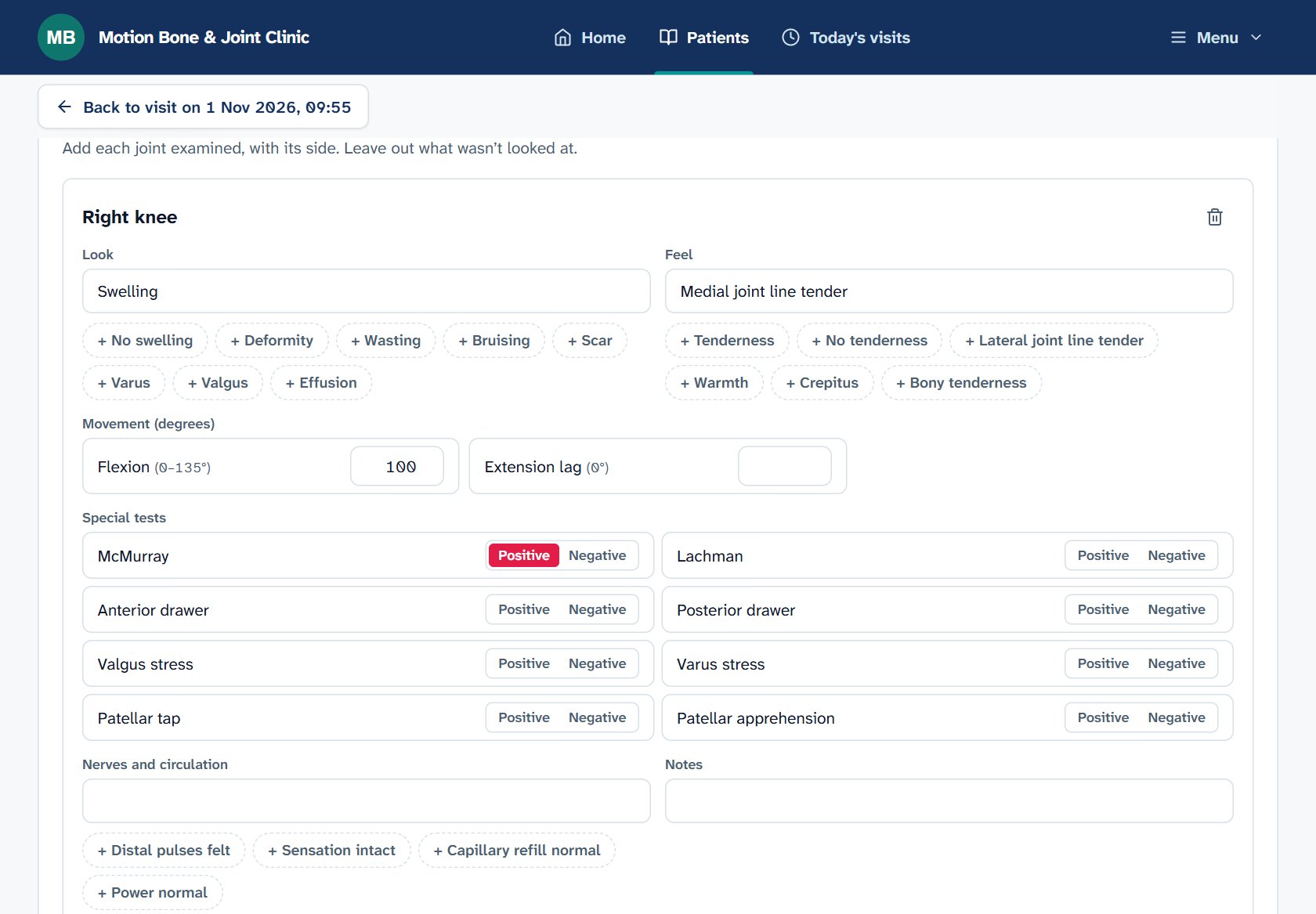
Built around the orthopaedic examination
The assistant takes the history: how it started, which side, how long and the pain score. The doctor examines each joint by side, or the spine with the neurology of each leg or arm, and the visit keeps it all for next time.
Joint examination
Knee, hip, shoulder, elbow, wrist, ankle: look, feel, movement in degrees beside the normal range, and the special tests for that joint.
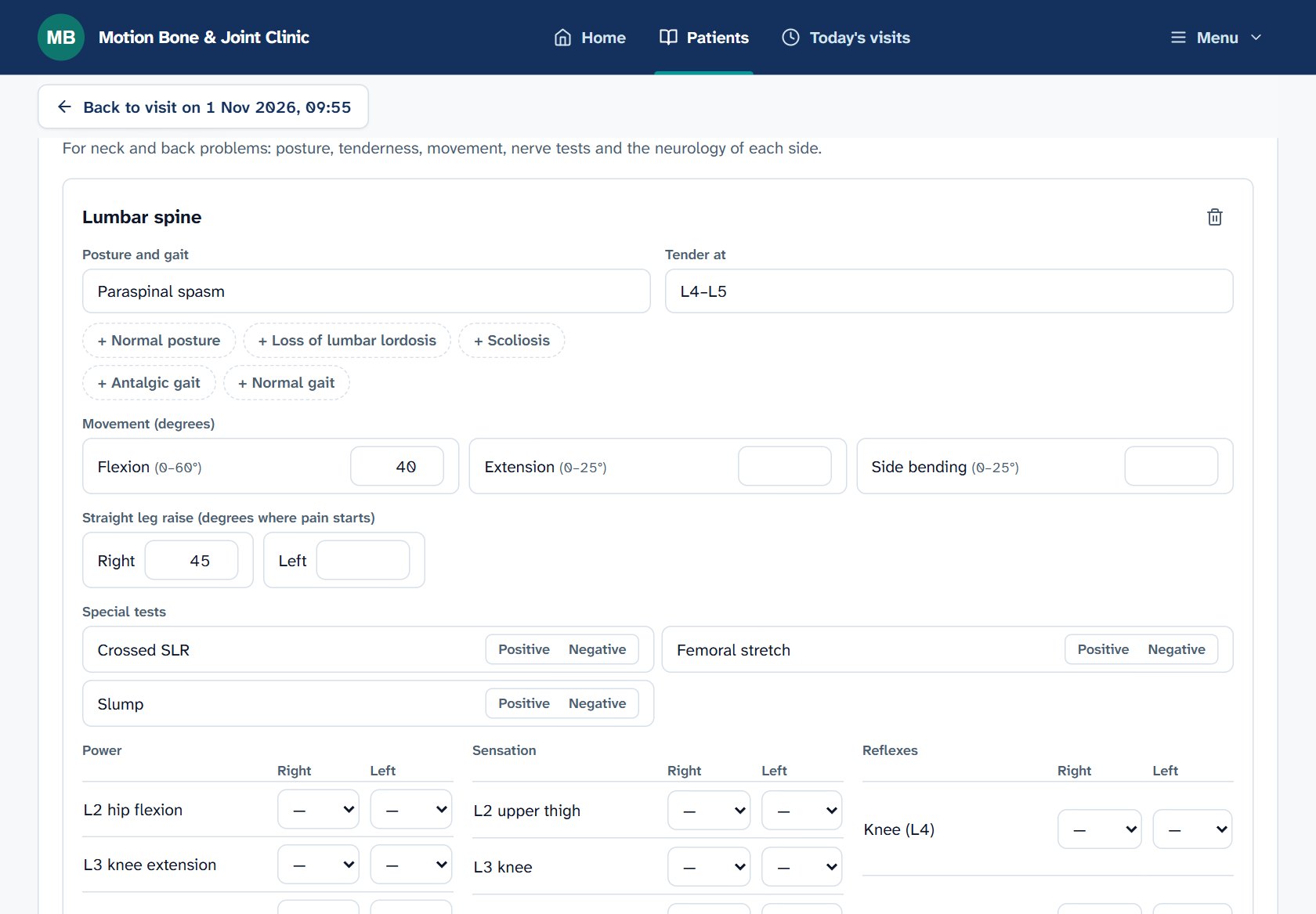
Spine examination
Cervical or lumbar: posture, tenderness by level, movement, straight leg raise, and power, sensation and reflexes for each side.
Diagnosis by side
Right, left or both on every diagnosis, with ICD-10 codes, carried forward to the next visit.
Medicines and advice
Painkillers, calcium and vitamin D, gels for one side, and advice such as ice, rest and the exercises, on your letterhead.
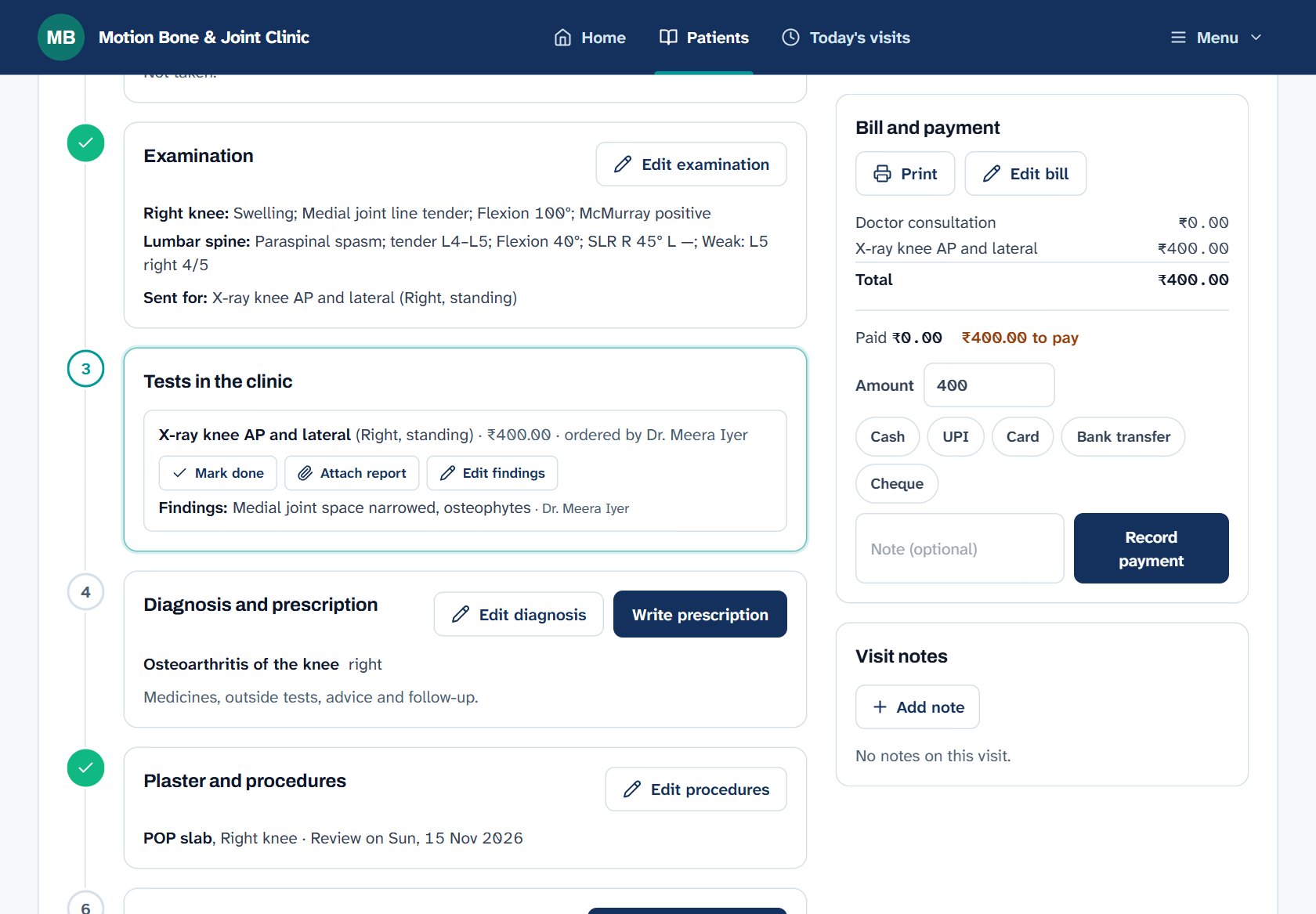
X-rays, casts and procedures
The doctor sends the patient for an X-ray with the view and side, the counter adds it to the bill, the film is attached and the doctor writes what it shows. Casts, slabs, dressings and injections are recorded with the day they come off or are reviewed, which shows on the patient’s page until then.
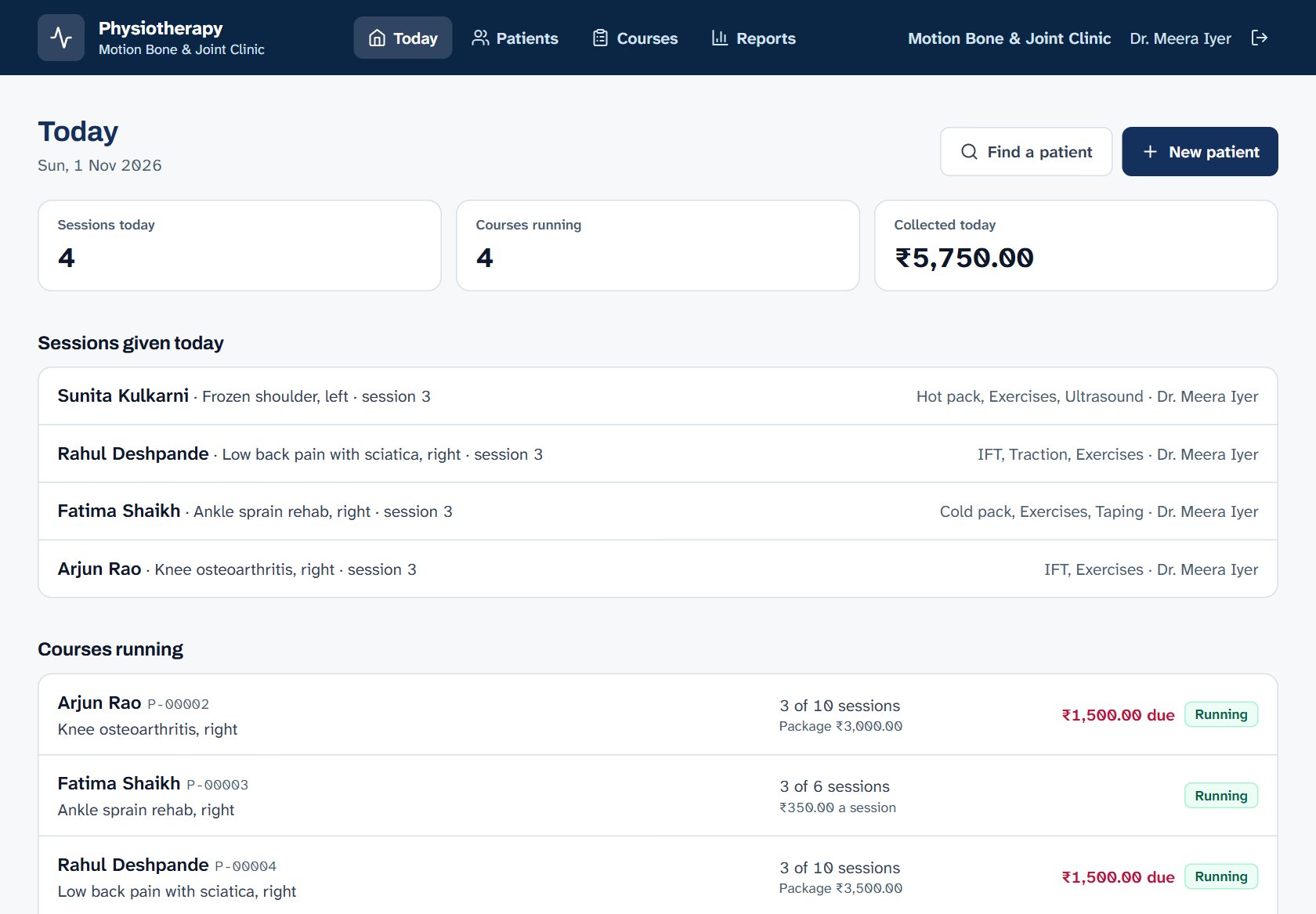
A physiotherapy unit with its own receipts
Switch on physiotherapy and the physio room gets its own app, run as a separate business: its own patients (walk-ins, or clinic patients added by their clinic ID or phone), a course of sessions for each, every session recorded with the pain before and after, and payments on the unit’s own numbered receipts.
Courses and sessions
How many sessions, how often, the exercises and the treatment given, session by session.
Packages and receipts
A package paid ahead or a price per session, with what’s left to pay and receipts on your letterhead.
Made for
- Orthopaedic surgeons in private practice
- Bone and joint clinics with several doctors
- Clinics with their own physiotherapy room
Questions
Can the assistant take the history and the doctor examine?
Yes. Each person signs in with their own role. The assistant records the complaint, how it started and the pain score; the doctor does the joint or spine examination, sends for X-rays, diagnoses and prescribes on the same visit.
Does it connect to our X-ray machine?
Not directly. The doctor orders the X-ray with its view and side, the counter bills it, and staff attach a photo or PDF of the film or report to the visit, where the doctor writes the findings.
How does physiotherapy work with the clinic?
The doctor advises physiotherapy on the prescription. The physiotherapy unit is run as a separate business: it adds the patient by their clinic ID or phone, copying their name, phone, age and sex, and gives its own receipts, per session or for a package. People can also come for physiotherapy alone.
How much does it cost?
Phisley is free for 60 days, then ₹4,999 a month (plus GST) on the Standard plan, with every module included and up to 3,000 visits a month. Larger clinics and hospitals get enterprise pricing.
See Phisley with your own clinic’s workflow
Register in a few minutes and start with today’s patients, or book a demo and we’ll walk your team through it.